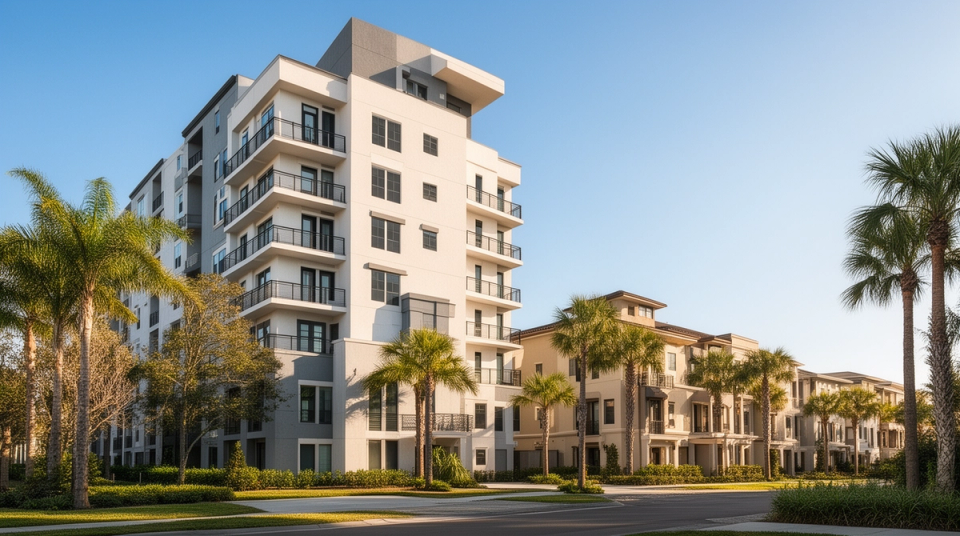
Two Florida homes can look nearly identical from the street yet come with very different obligations. One may be a condominium unit; another may be a fee-simple townhouse within a homeowners association. 'Townhouse' often describes a building style, not the legal form of ownership. Buyers should investigate the documents and expenses rather than decide from photographs or the listing label.
Identify the form of ownership first
Ask whether the property is legally a condominium unit or a separately owned lot and structure. Check the deed, recorded declaration, survey or condominium documents and governing association information with your title and real estate professionals.
A townhouse-style building can be legally organized as a condominium. That distinction may affect which Florida statutes and disclosure rules apply.
Understand where ownership ends
Review which elements are owned privately and which are common property, shared responsibility or limited common elements. Questions can include roofs, exterior walls, yards, fencing, driveways and attached structures.
Do not assume a fee covers roof work or that private ownership permits unrestricted exterior remodeling. The declaration and related governing documents control many responsibilities.
Read the association budget, not just the monthly dues
Compare routine assessments, reserves, insurance arrangements, pending capital projects and special assessments. Low current dues do not automatically mean a building is inexpensive to maintain.
Ask for financial documents and meeting minutes when available and appropriate. Buyers of qualifying condominiums should also investigate inspection and structural reserve materials relevant under current law.
Compare insurance and repair responsibilities
Ask which insurance is carried by the association and which coverage the individual owner must obtain. A condominium unit policy may differ substantially from a policy appropriate for a fee-simple townhouse.
Review deductibles, excluded risks and the procedure for recovering from significant losses. Get quotes specific to the legal ownership structure; do not assume a neighboring building's premium applies.
Look at restrictions and resale considerations
Review leasing limits, pet and parking rules, architectural approval processes, access arrangements and planned community changes. Your preferred way to live in or rent out the home may conflict with a rule.
Build a side-by-side worksheet comparing price, monthly obligations, owner maintenance, coverage, documents and resale constraints. The right answer is the property whose total responsibilities fit your plans—not whichever one has the friendlier name.
Review Florida condo inspection and reserve due diligence
Compare Florida homes with Anchor House
Related guide: Florida HOA Estoppel Certificates: What Home Sellers Should Know