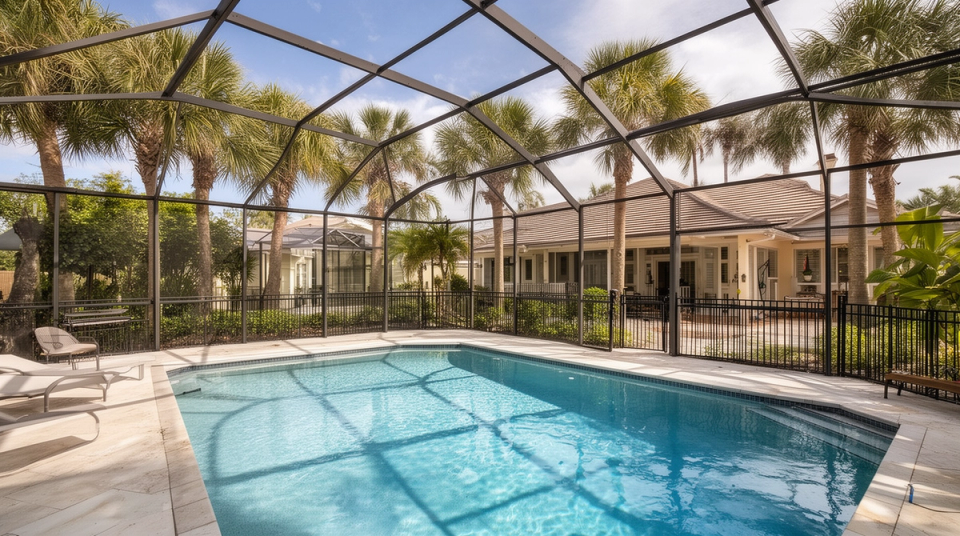
A pool changes a Florida home's everyday appeal and its ongoing obligations. Shimmering water in listing photographs cannot tell you whether the shell leaks, the equipment is near replacement or safety features meet applicable requirements. An informed buyer investigates the pool as its own system and includes the answers in the purchase budget.
Schedule a dedicated pool evaluation
Ask whether your general home inspector evaluates pools comprehensively. If not, consider a qualified pool inspector to assess structure, finish, tile, coping, skimmers, circulation, filters, heaters, automation, leaks and visible electrical concerns.
Request maintenance records and any available repair invoices. A pool that works during a showing can still have intermittent pump failures or hidden leaks. Document what the inspection did and did not test.
Review barrier and child-safety features
Florida's Residential Swimming Pool Safety Act addresses safety features for covered residential pools, and Section 515.29 describes barrier characteristics. Requirements and exemptions depend on the installation and property circumstances; confirm details with the local building department or a qualified professional.
Inspect self-closing gates, locks, alarms, enclosure doors and screens. Never treat attractive landscaping or an ordinary backyard fence as proof of compliance. Families without children should still take safety seriously because guests and future occupants may use the property.
Verify permits and past modifications
Ask for documentation of construction, resurfacing, heater additions, screen enclosures and other major work. Search the local permit record and discuss any discrepancies with the seller and closing professional.
Pool improvements may trigger separate electrical, plumbing or barrier requirements. Do not assume that an older installation automatically meets current standards or that visible equipment was installed by a licensed contractor.
Price the actual cost of ownership
Build a budget for water, power, chemicals, cleaning, equipment servicing, resurfacing reserves and storm-related work. Ask service providers for property-specific estimates; costs vary by pool size, equipment, usage and local conditions.
Ask your insurance professional how the pool, diving features, slides, fences and occupancy plans affect eligibility or premiums. A buyer intending to rent out the home should raise that intended use explicitly.
Make the inspection findings part of negotiations
Separate urgent safety or functional defects from elective upgrades. Obtain contractor estimates for costly items and check contractual notice or cancellation periods carefully.
An inspection report provides information; it does not automatically require a seller to repair anything. Work with your agent and relevant professionals to decide whether to request repairs, a credit, a price adjustment or a different property.
See the broader Florida home inspection guide
Ask Anchor House about a pool home
Related guide: Florida Home Insurance Quotes: What Buyers Should Confirm Before Closing